
Biso Bantu Boye
My Congolese culture inspired art installation at Elitha's gallery in Holborn, London.

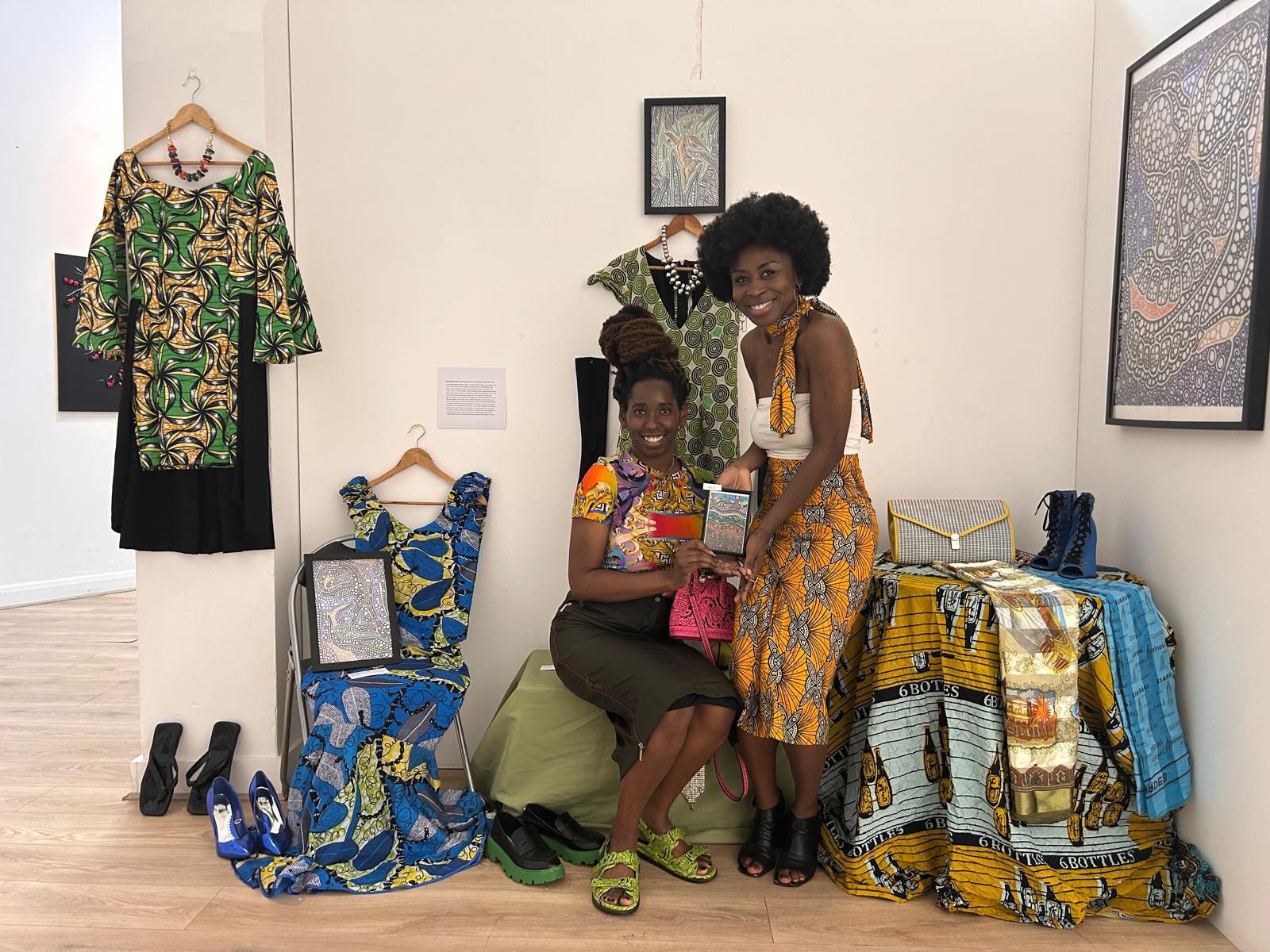
In July I put myself forward for an opportunity to exhibit as an artist in The National Institute of African Studies’ Rhythms of Kolonga exhibition. Held at the NIAS gallery in Holborn, London, the exhibition formed a central part of their month-long celebration of the Democratic Republic of Congo’s creative talent and its Independence Day. What follows is a write up reflecting on textiles, fashion and print as an integral part of Congolese community practices and culture.
As a people the Congolese think in outfits. Fact.
We don’t grab a top and pair it with just anything…
A Congolese person will consider the top as the beginning of their visual story. If paired with jeans for that “casual look” we review cut, fit, colour and finish to determine whether it goes with this t-shirt. Does it “set it off??” And be sure, we are rarely going for unassuming. We want you to see us.
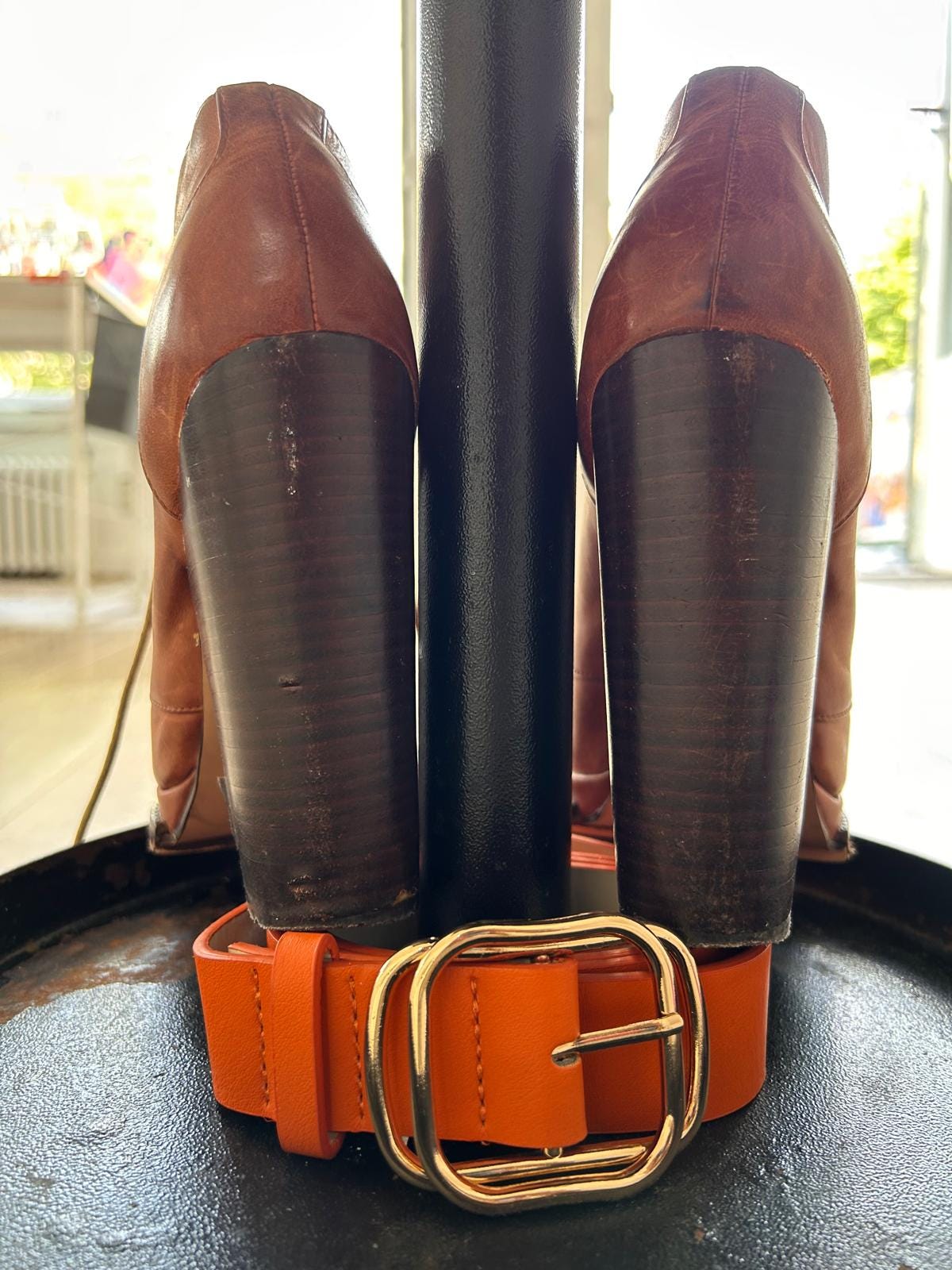
Have you heard of Sapologie? Dandies? That’s us! Everything is “a look,” so we consider which piece of footwear? Which belt? In fact, in a time where belts seem to have unceremoniously gone out of fashion, the Congolese may be the final champions of this sacred accessory! Now, hat or no hat? Kitambala (silk head scarf) or no? Head wrap, or no? So many choices and we’ve yet to think about the jacket or shirt, neck scarf, glasses, and jewellery. We think in outfits – from head to toe. It is a matter of pride, and expressive representation that goes beyond the individual.
We are Bantu people, and we exist in communal consciousness across all life contexts, including apparel. How I dress tells the story of me, as a branch of a wider tree - the family, the community, the tribe, Africa.
The internal dialogue says, “don’t let yourself be the source of our shame.” In Lingala we hear it as “koyokisa biso soni te!” Growing up this is culturally enforced and engrained by mothers who ask you “is something wrong?” or “where are you going with your matoyi motakala?” simply because you omitted to wear earrings. Have you ever heard the term “naked ears?” If not, then welcome to the experience of a Congolese girl or woman. It’s NOT an outfit without the earrings. If you’re really doing it for the culture (/ self-respect) you’d better have the neckpiece, rings and bracelet, bangles and watch too. In the words of Luther Vandross “Never too much, never too much, never too much!”


We think and feel in “biso” terms – us, we, ours.
Reason why uniform is synonymous with Congolese fashion culture and tailoring practise. When we wed, when we mourn, when we pray, when we study, we do so in uniforms. There is an unequivocal sense of pride and celebration attached to Congolese uniform tradition. It is an institution to be revered.


In marriage the bride’s family will choose one specific textiles print (liputa) and the groom’s family will choose another that compliments or contrasts. Each family makes a collection of funds (“cotisation,”) and sends out a team of chosen women to purchase enough of the material for all family members to have an outfit sewn. Each member chooses or designs their own outfit for a tailor to stitch for them. By the time of the wedding the two families are identifiable by one of the two print designs chosen. The wonderful range of individual outfits sewn in each respective print is part of the joy, the ostentatiousness and display of the occasion.
In true Congolese fashion multiple entrances into the wedding venue, with choreographed group dance routines provide the perfect runway for a fashion parade and testament of pride.
In fact, the wedding couple are expected to have at least one outfit change and with that their collection of dancers (usually sourced from within the family and extended family) will also have their own costume change too. It is a spectacle, so YES, we marry in uniforms!
Burials are another key milestone in the life of the community and the funeral is respectfully marked by the choosing of one cloth that the family will wear as a mark of unified respect and mourning. Again, each family member will take their allocated piece of cloth (liputa) to a tailor of their choice, with a choice of design they wish to wear on the day. Generally, as a show of respect, no makeup or jewellery is worn, other than religious symbols such as rosaries. The outfit concept is still detectable via choices of headwear, scarf/ shawl, glasses, watch, footwear and bag. Even in death and burial we are still Congolese, after all.


Print, colour, pattern and form are incredibly important in African textiles because they are choice companions in the visual stories, we create about ourselves as a community, as a people. Through this practise we establish and dictate how we wish to be seen. Style as affirmation.
Each time a set of sisters, aunties, or mamans go shopping to make a liputa selection they wander round the shops and markets for hours. They look from afar, get up close, pick up and run their hands across the fabric surface. They open up a folded liputa to scrutinize or admire the full pint design. They hold it up against their bodies or the body of another in the pack, to see how it might look. They leave the shop and come back, maybe once, maybe twice, despite the fact that there are tired group members who just want to go home. An elder snaps and scolds; This is serious work. Focused. They lay various cloth choices out parallel to compare and contrast. They consider that so and so (e.g. Yaya Nadine) doesn’t like pink. They recall the favourite colour of the groom. They warn “Sister Matondo had this print or something similar at her wedding last year!”
They barter prices, charm and harass vendors and turn up their noses until they get the “best price.”
They go home, eat and they make phone calls telling family members to come and collect. They take pieces to church on Sunday and give them out. They bicker with that one family member who did not pay for her piece, and likely won’t… but roll their eyes, kiss their teeth, and give it to her anyway. She says she’ll pay in instalments. It will be a story to complain and laugh about long after the event has passed.


Local tailors will be inundated with orders. Some tailors will be an aunt, a cousin - an in-law. One tailor may stitch more than ten outfits for a family! Other pieces may be stitched by numerous wonderful hands in an atelier. For each member they will gather measurements, draw and make patterns, cut and stitch a bespoke piece for their figure and to the client’s liking. The tailor will likely try and get an invitation to the wedding, if they haven’t had one already. Poses will be struck, compliments will be paid, bodies will be prodded, squeezed in, accidentally pricked with a pin, zipped up, plumped and poked. Someone will be chastised for picking a design that is too short or revealing. Tailors will definitely be late on an order. There is an anxious somebody, in tears being consoled by a loved one. “It’ll be alright. If yours isn’t made in time, you can wear the top that goes with my skirt. We’ll make this work.”
Conversations, journeys, relationships, togetherness and memories will be imprinted into this cloth, long before it makes it to the event. The cloth, the print become a part of us. They join the family; become a language for our tongues to speak over.
The liputa grows itself like casava roots into our identity and we carry it on our bodies loudly, proudly professing ourselves as one in a wider whole. Grounded. Elevated. Biso. Bantu. Boye.


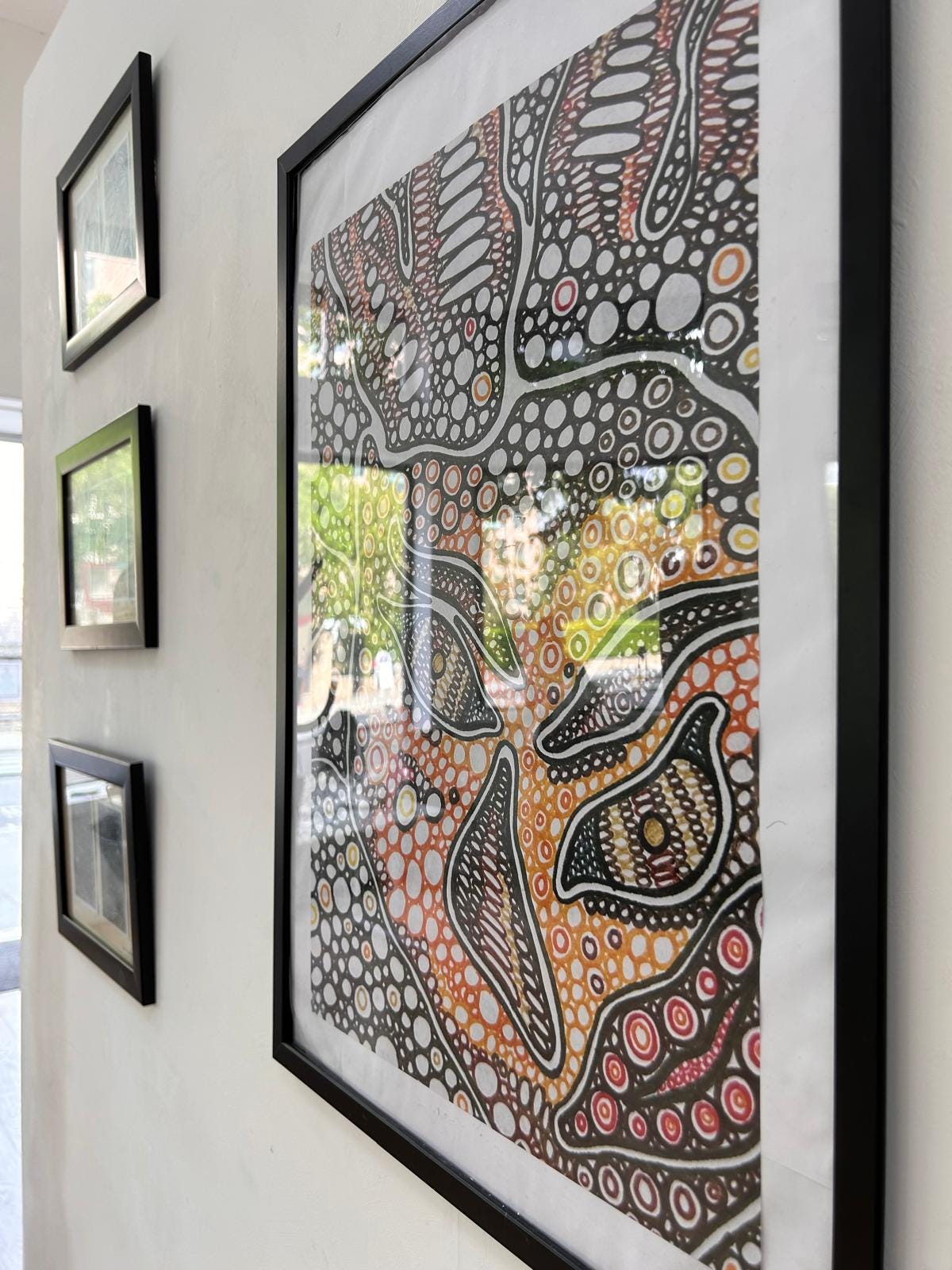
People often comment that my art reminds them of African wax print. They ask if that is intentional.
I have to say no. It isn’t. When I draw it is a meditation; a homecoming. I began drawing again last year. I hadn’t done so in many years and upon my return to pen and paper this is the style that has evolved. It was not intended but the work is intentional. By this I mean to say that when I place a pen on the page, I never dictate what will be. I tune in. I get quiet. I feel what wants to be felt and I follow that felt sense. If a vision comes into Spirit, I try not to question it. Maybe it’s the ancestors. Maybe it’s me. I allow space and interpret it onto the page. Drawing is a somatic practice for me. It is a part of my well-being practise. It has been seeing me through health challenges that have taken my life and ruptured the seams. In a time when I have often felt inside out and back to front, drawing is a constant that returns me to me.
In fact, if I’m honest I don’t consider these as drawings. They are doodles – something less formalised, unburdened by judgement, and thankfully free.
When doodling I experience myself as child-like again in the singularity of my focus and abandonment of the world. Each piece is a diary entry. I am speaking to myself about what is, what I need and how to stay free. I learn from my pen which is why I always encourage others by saying “Pick up your pens!” This is how we claim our power back; by penning our own narrative and teaching the world how to recite it. It is no wonder to me that as I make my unconscious visible on paper, as I allow the unspoken to find it’s voice through the pen, I find my culture, my origins, my people emerging and taking the frame. No, it is not intentional that the works resemble African wax print. It is intentional that they speak of me. This is how my authenticity chooses to speak.
Congolese. We glow. We grow and we continue to step into the world as beings to be seen, respected and celebrated.
Whatever you take away from this collection, I pray you take away a sense of our creativity, because it is the thing that fuels our ingenuity, our vibrance, our resilience, our healing and our hope.
Couldn't agree more. It’s fascinating how much an outfit can be a full narrative. I'd never really considred it quite like this, but you make such an insightful point about clothing as culture. Thank you for sharing!
Hugely enjoyed reading this, Pid'or! What a joyous tonic. Your love and affection, and the vibrancy of Congolese customs, shine through.